Skydiving Phrases & Lingo
Skydiving

Welcome to the wild world of skydiving lingo and skydiving phrases! To us, a slammer isn’t the ol’ hoosegow, butter is an adjective, and sky gods aren’t actual deities – although they may think they are. It’s all parachute slang!
Knowing skydiving terms will make going to the dropzone a bit more easy-to-follow, especially if you’re planning to pursue the sport! Let’s take a dive into some skydiving gear, general skydive slang, and common abbreviations in the world of jumping.
Here’s a breakdown of our top skydiving slang:
AAD.
Automatic Activation Devices are small computers nestled in the container the skydiver wears. They’re turned on prior to jumping, and are designed to ‘fire’ and initiate deployment of the reserve canopy if it detects that the skydiver is falling too fast and is too low – indicating they don’t have a parachute out at an altitude when they should. AAD’s save lives and are an essential part of gear checks!
Base.
Nope, we’re not talking about BASE jumping (which refers to leaping from Building, Antenna, Static, Earth objects), but the base of a formation. The group of people in freefall that a formation is built around is called the base. OR the ‘base’ is also the second part of your landing pattern: downwind, base, final.
Beer line.
A part-imaginary, part-tangible line that if (or let’s be real, when) crossed, the skydiver at fault has to pay beer fines – bringing a 6-pack, or the sober-minded equivalent to the communal dropzone fridge. The line is usually positioned near the landing area, and denotes an area that shouldn’t be crossed when coming in for landing.
Blue skies.
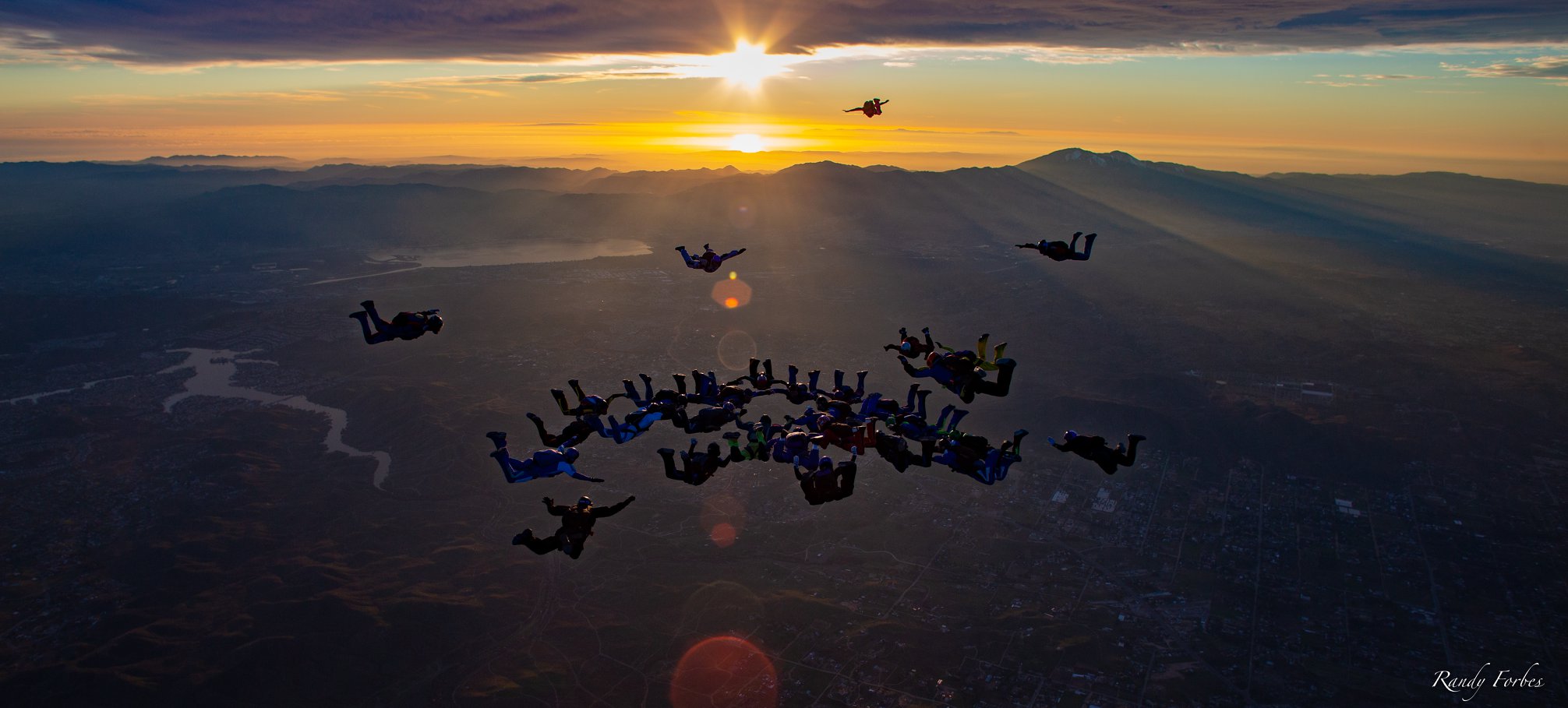
What do people say when they skydive? Blue skies! Why do skydivers say blue skies? It’s a way to say ‘good luck, have a great jump!’ Blue skies is considered as the universal slogan for skydiving.
Break-off.
The altitude at which a group of skydivers ends a portion of a skydive. This is typically used to reference the end of the freefall portion of the jump, and it is part of the pre-jump plan. At that altitude, the skydivers turn away from each other and initiate a tracking motion away from the center of the formation. It is standard to set the break-off altitude to be whatever the least experienced jumper is comfortable with. This term is also used for breaking away from or ending a canopy formation during CRW, wingsuit formations, or any other portion of a jump where people are intentionally flying near one another. The purpose of a break-off is to allow ample separation between all skydivers.
BSBD.
The BSBD meaning is blue skies black death indicating that the sky is bright blue and full of fun and opportunity (the yin), and the ground is full of despair (the yang). In a sense, they thrive on balance – one is needed for the other to survive. When a skydiver perishes, the community will respond by solemnly saying “BSBD.” It’s a unifying phrase that was adopted in the 70s.
Burble.
A turbulent air pocket behind a skydiver in freefall or under canopy is called a burble. The body (or the parachute) disrupts the normal flow of air, so anyone above (or behind) them will be caught in their burble. Think about when you’re driving behind an 18-wheeler on the highway and how you can feel your car shift a bit – you’re in the truck’s burble! Burble is also a common software used to manifest jumpers – you may hear someone say, “OMG I can’t get on this load, I need to add money to my Burble account!”
Butter.
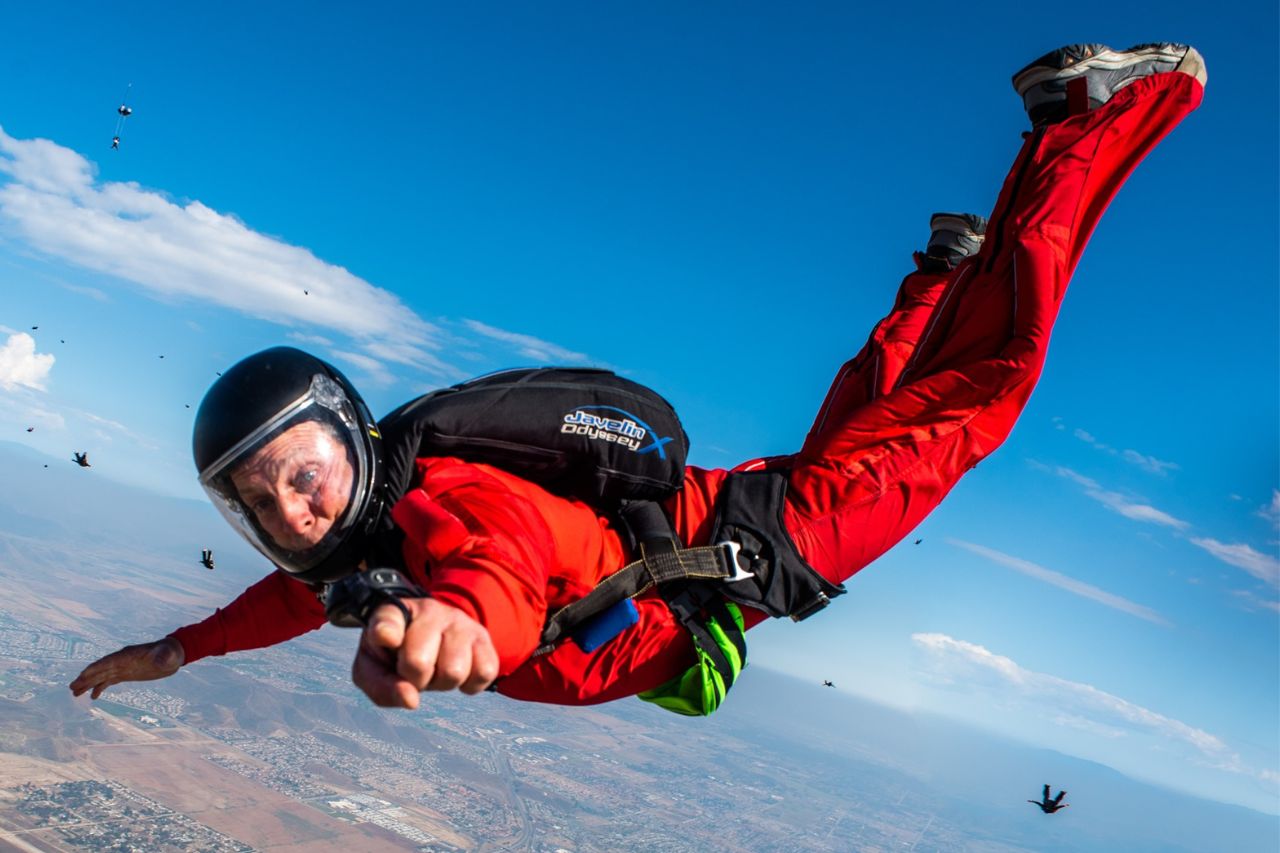
“Dude, that opening was so buttery,” is said when someone’s canopy opens with a notable smoothness. This term can also be used to describe a sick skydive with excitement: “AHHH! That was pure BUTTER.”
Call.
The amount of time before a load – it’s shown on the manifest board. “We’re on a 10-minute call!” means that the plane will be wheels-up (taking off) in 10 minutes, and that skydivers need to be ready for this.
Canopy.
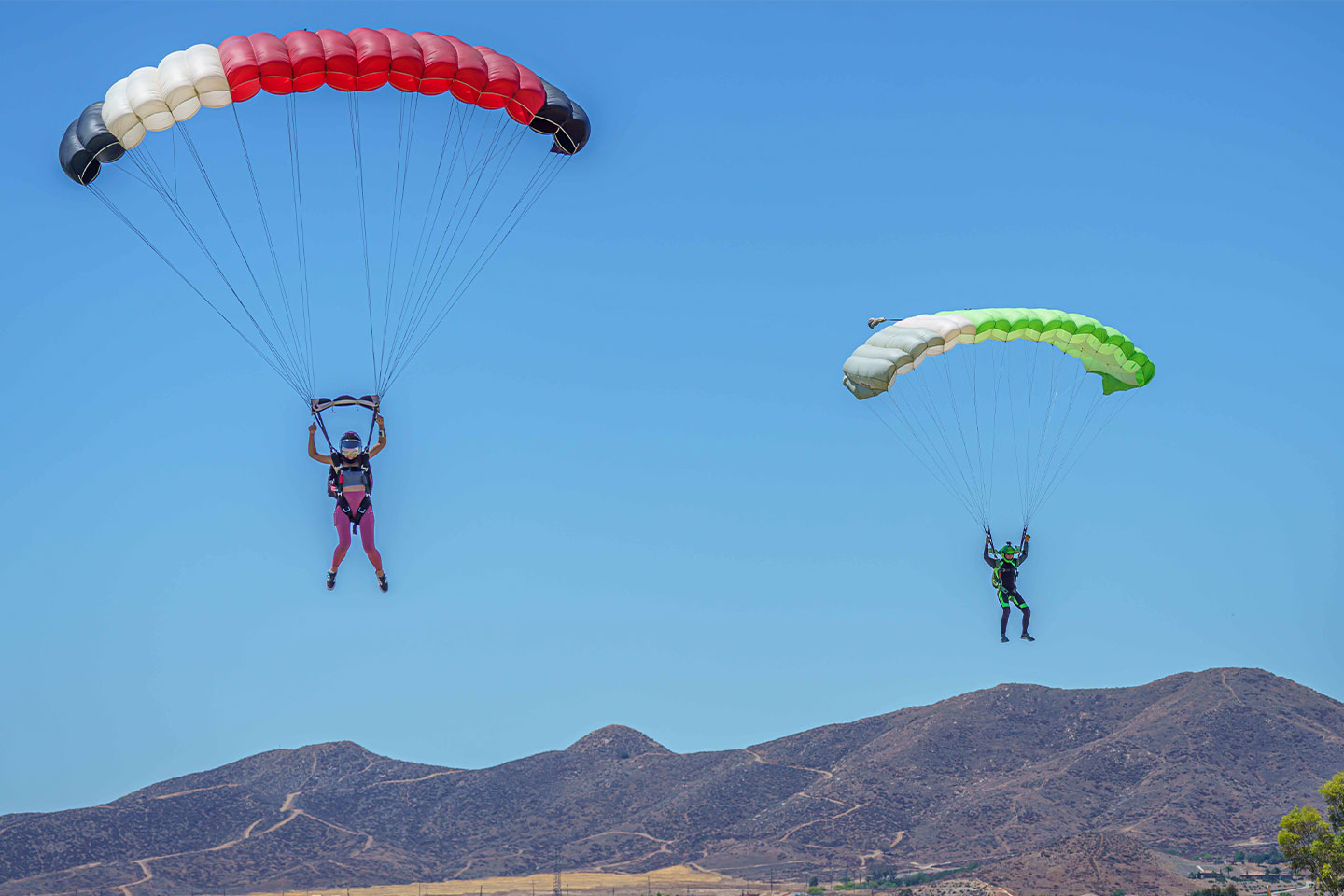
What is slang for a parachute? A parachute is also known as a canopy or a wing, and there are main (primary) and reserve (secondary) canopies.
Cutaway.
It’s the act of getting rid of your main canopy in case of a malfunction. Yes, it happens, and that’s why we have two in our rig (scroll below for the definition of that word).
First.
AHHH!! The forbidden ‘F’ word! When skydivers do something for the first time (AFTER gaining their license, because everything is a ‘first’ as a student), they have to pay beer fines! This fine also applies to hitting milestones in the sport – such as 100 jumps, first video jump, first time landing off the dropzone, etc.

Freshling.
The word Freshling describes the newly licensed skydiver, who has less than 150 jumps and participates in our yearly event Perris Fresh Meet – a MUST for most new skydivers in North America!
Jump run.
The direction the aircraft is flying when skydivers exit – this is represented with compass bearings like so:
- North: 0° or 360°
- East: 90°
- South: 180°
- West: 270°
It’s important to know the jump run to avoid freefall or canopy collisions. For example, when it’s time to break off from freefall and track away to deploy your canopy, you should not track along (up or down) jump run, but rather perpendicular to it. This is to avoid any group of jumpers who exited before or after you or your group.
Manifest.
In skydiving, manifest is a noun and a verb – we’ll explain. Manifest is the list of jumpers on a load … and it’s also the act of putting oneself on said list, and it’s also the people and place of where this act is done. Here’s an example: “Hey, can you manifest us for Load 10?” “Yeah, of course,” *proceeds to walk over to manifest and asks to get on the load* “Hey, I asked manifest to put us on Load 10, we’re good to go!” Make sense?
Pilot Chute.
Contrary to popular belief, skydivers never use the word ‘chute’ to talk about their parachute. We do use a ‘pilot chute’, though! It’s a tiny parachute attached to the end of a bridle connected to our canopy. When it’s time to open, we pull the pilot chute out of its pocket, throw it into the wind, which inflates it; the pilot chute then pulls the bridle out of our rig (see definition below), the bridle pulls the canopy out of the bag in which it is folded, and voilà, we have a parachute above our heads!
Rig.
Now with this word, everyone will think you’re a true skydiver! It’s what we call the backpack container that contains our main and reserve canopies, and AAD. Still keeping up?
Shredder.
Sky god, ninja, you name it … they’re all synonymous for kick-ass skydiver.
Shut-down.
If a load is a ‘shut down’ it means that the aircraft is going to land and turn their engine off for at least twenty minutes before flying the next load. Contrarily, a ‘turn load’ is one where a shut down does not occur … the plane will land, pick up skydivers, and take off immediately, en route for more amazing adventures in the sky!.

Spot.
“Hey, what’s the spot?” is common to hear before loading the plane. This refers to the position of the plane compared to the landing area in which the pilot gives the green light to exit. For example, someone may respond to this question with, “Jump run is 230 and the spot is .2 prior,” which indicates that the plane is flying southwest and the pilot will give the go-ahead to exit .2 miles prior to the landing area.
Swoop ’n chug.
The swoop ‘n chug – when canopy pilots zip in for landing and simultaneously grab a brewskie from someone positioned in the landing area – is a quintessential part of the last load of the day, the sunset load! But we think ‘landings and lagers’ is a bit more inclusive to those of us who land like normal instead of swooping in, so that’s what we call it at Skydive Perris!
Uppers.
This is the wind direction and speed at the altitude in which skydivers will exit at. “The uppers are cooking today!” is something someone would say if the winds “up top” were particularly swift.
Although skydiving and funny words may seem to go hand-in-hand, we really do take our sport seriously and we’re passionate about sharing it with others. Book your jump today to learn even more about our culture. We can’t wait to have you! Blue skies!
You May Be Interested In:
Most Important Moments in Skydiving History
2 months ago by Skydive Perris

How to Pick The Best Skydiving Canopy For Me
2 months ago by Skydive Perris

San Diego to Skydive Perris: An Experience You Can’t Get Closer To Home!
3 months ago by Skydive Perris

Skydiving Gear Checks
3 months ago by Skydive Perris